Whether you are getting your horse back in shape in the spring after an inactive winter, preparing for an event, or simply trying to keep your senior horse fit and healthy, proper conditioning practices can speed up your horse’s progress while protecting them against exercise-related injuries.
Start By Assessing Your Horse’s Before Condition
Before you begin a conditioning program, you will need to assess your horse’s current state.
What is their weight? Using weight tape can help you estimate and keep track of changes in your horse’s body condition. You may also want to take photos at different angles to watch for changes in your horse’s physique.
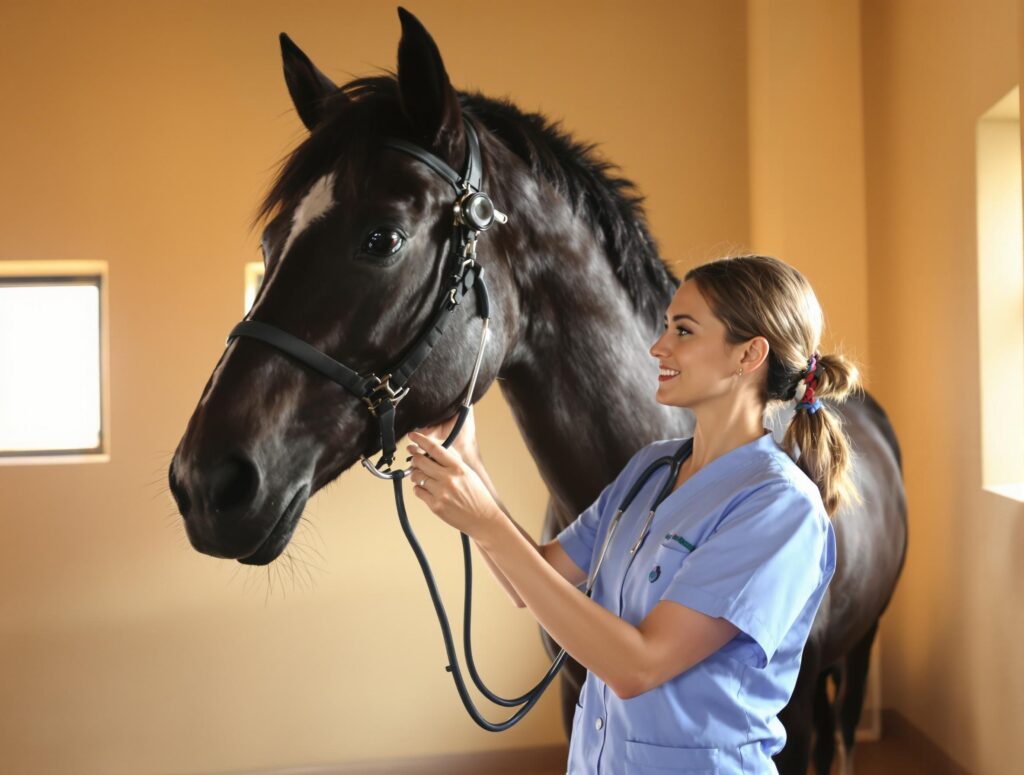
Check your horse’s resting heart rate. It should be between 30 and 40 beats per minute. You will also want to check your horse’s heart rate periodically during rides to gauge how they are responding to exercise. Their heartbeat will be between 120 and 180 beats per minute during exercise, depending on how hard they are working. Also, keep note of how long it takes their heart rate to return to their resting rate after exercise.
Maintaining your horse’s health during conditioning also involves proper nutrition, parasite prevention, and general wellness care. Many horse owners rely on products found in the PetMeds Horse Supplies category to support daily care routines.
Starting A Conditioning Program
There is no perfect conditioning program that works for every horse. Consider your horse’s age, body condition, and your personal goals. Are you preparing for a competition or simply improving your horse’s long-term health and fitness?
The first few weeks of your horse’s conditioning program should focus on short, easy sessions that gradually build endurance.
Start by riding on flat land for about 30 minutes with 5 to 10 minutes of calisthenics or trotting.
About 20 percent of each session should consist of warm-up and cool-down time.
- Warming up improves your horse’s precision, range of motion, and speed while helping them mentally prepare for activity.
- Cooling down helps clear lactic acid from the muscles to reduce soreness and speed recovery.
Providing proper nutritional support during conditioning can also make a difference. Many owners use products from the Horse Vitamins and Supplements category to help support joint health, muscle recovery, and energy levels.
Stepping Up Your Horse’s Training
After about six weeks, you can begin adding more challenging exercises to your routine. If you are training for a sport, this is the time to begin sport-specific activities.
Drills should make up no more than 30 percent of the ride. Warming up and cooling down remain just as important, if not more important, as your horse becomes stronger.
Keep a journal of your horse’s activities along with their vital signs and the progress they have made. Based on your horse’s response to training, you can gradually increase the intensity or duration of workouts. However, avoid increasing both at the same time. Overtraining can lead to poor performance and increase the risk of illness or injury.
The Importance Of Rest And Recovery
Giving your horse adequate time to rest between rides is crucial for building muscle and preventing injury. In most cases, working your horse three to four days per week is sufficient.
It can sometimes be more effective to have two moderate sessions in one day with time to rest in between rather than one intense session.
You may also consider adding recovery practices after workouts:
- Post-workout massage to increase blood flow to the muscles
- Stretching or light walking after exercise
- Proper hydration and nutrition support
Some horse owners also add supplements such as Missing Link to provide nutrients that support joint health and energy levels. Supplements like these can also help supply extra calories and support faster recovery between training sessions. Additional options can be found in the Horse Joint Supplements category.
With a gradual conditioning program, proper rest, and the right nutritional support, you can safely improve your horse’s fitness while helping them stay comfortable and healthy throughout training.