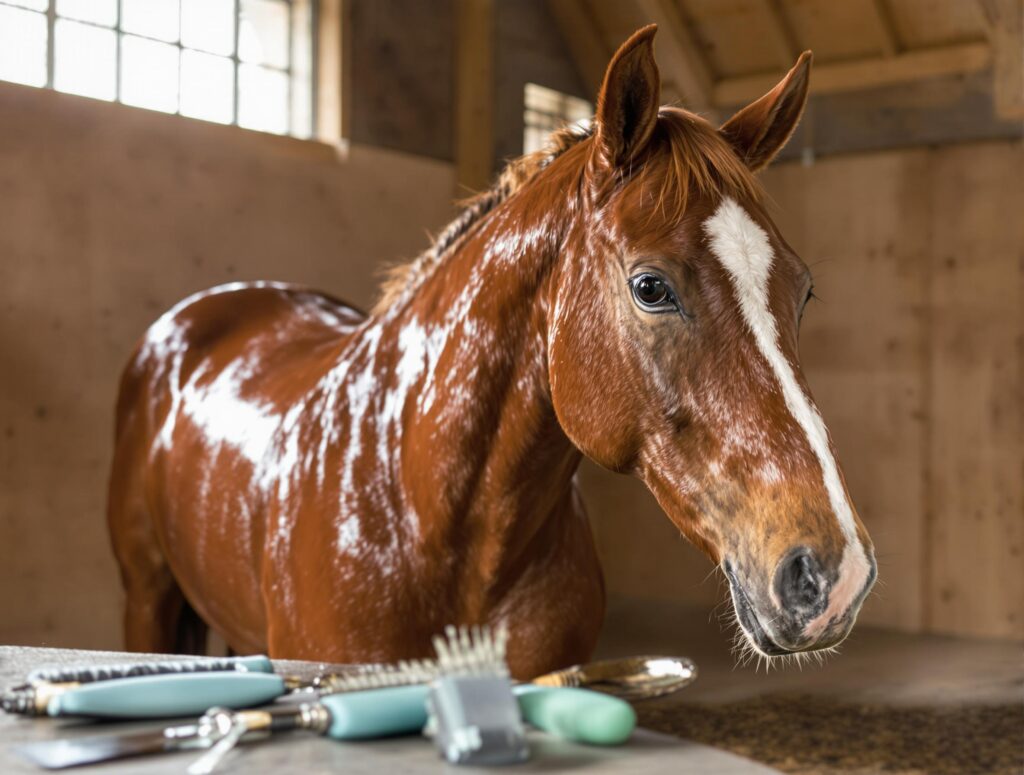
A sleek, shiny coat starts with healthy skin. Dry, flaky skin and a dull coat can regain their luster with the right grooming routine. However, if your horse’s skin and coat remain dull and dry despite healthy grooming, it can be a sign of an underlying health issue. Parasites, infections, hormonal irregularities, and nutritional deficiencies are some of the most common reasons horses lose their shine.
Causes of Dry Skin in Horses
Your horse’s skin cells produce sebum, or natural oils that form a protective barrier over the surface of their skin. Sebum travels down the hair shaft to give your horse’s coat its natural luster. When your horse does not produce enough sebum, possibly due to health issues, moisture escapes more easily through the surface of the skin, leaving it dry, rough, and inelastic.
Parasites are a common cause of dull, unhealthy-looking skin in horses. External parasites like mites and lice can cause dry, itchy skin that may develop scabs or raw spots. A heavy load of internal parasites in your horse’s gut can also be the culprit. Internal parasites deplete nutrients from your horse’s body, causing poor hair growth and dry, undernourished skin. Regular deworming and parasite prevention products found in the horse wormers category can help protect your horse from internal parasites that impact coat health.
Horses with metabolic issues like Cushing’s disease and Equine Metabolic Syndrome are prone to poor coat quality due to changes in hormone levels that affect sebum production and skin elasticity. Older horses and geldings can also suffer skin issues related to hormonal changes.
Certain infections can also change the skin’s appearance. Crusty deposits in the ears may be aural plaques due to papillomavirus. Rain rot and ringworm can cause bald, scaly patches anywhere on the body. Treatments found in the horse skin and coat care category may help manage common skin infections and irritation.
Sometimes the horse’s skin cells produce enough sebum, but it may be washed away with excessive bathing. Dry climates and cold winter air can also contribute to skin dryness, even in otherwise healthy horses.
Treating Dry Skin in Horses
Any unexplained changes in your horse’s skin and coat should be discussed with your veterinarian. If you suspect your horse has a skin infection, you should isolate them from other horses in case the condition is contagious.
If your horse receives a clean bill of health and approval from your veterinarian, you can begin supporting coat health through nutrition and grooming.
Omega-3 fatty acids help balance sebum production, relieve dryness, and reduce itching and inflammation. They also benefit your horse’s joints, heart, immune system, and cognitive health. You can supplement omega-3 fatty acids in your horse’s diet by adding flaxseed, fish oil, or supplements found in the horse vitamins and supplements category.
Dry skin can also be a sign that your horse is being bathed too often, especially in winter. Bathe no more than every two weeks and sometimes as infrequently as once a month. Some horses benefit from skipping baths altogether during colder months.
When you do wash your horse, use a conditioning and moisturizing shampoo to soothe itching and help maintain the skin barrier. Between baths, brushing daily or at least three times per week can support healthy skin and coat condition.
Regular grooming can help in several ways.
- Brushing with a rubber curry comb or silicone brush increases circulation, which supports skin healing and stimulates sebum production.n
- Full body brushing helps natural oils travel down the hair shaft, leaving the coat smooth and shiny.
- Removing dirt and debris prevents buildup that can dull the coat
How Long Does It Take to Restore a Healthy Coat
It can take anywhere from two weeks to eight months to see significant improvements in your horse’s skin and coat quality. Coat growth and skin repair take time, especially if the dryness was caused by nutritional deficiencies or underlying health conditions.
If your horse’s appearance does not improve, or if you notice additional symptoms such as itching, hair loss, or skin lesions, schedule an examination with your veterinarian to identify the underlying cause and determine the best treatment plan.